

 By
By Mumbai does not get rebuilt in a single moment. It gets rebuilt in chapters.
We are now living through one of the city’s most consequential chapters Mumbai’s redevelopment renaissance. In a land-constrained metropolis, the next phase of growth cannot depend only on outward expansion. It must come from within: renewing ageing housing stock, improving structural safety, strengthening neighbourhood infrastructure, and upgrading the lived experience of residents without dismantling the social identities that make Mumbai’s localities distinct.
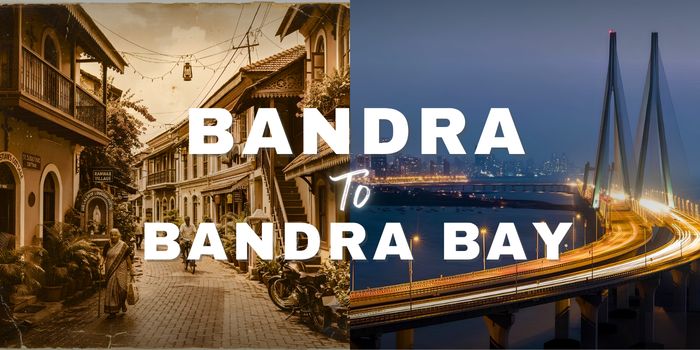
This is not merely a real-estate cycle. It is urban renewal at scale. It is also why established precincts like Bandra are evolving again, this time into a waterfront-led identity that many now recognise as Bandra Bay.
Bandra Bay is not a label created in a boardroom. It is a visible outcome of multiple forces converging: infrastructure that compresses travel time, proximity to economic hubs that shapes demand, a social fabric that attracts culture and talent, and the timeless advantage of the waterfront.
The Redevelopment Renaissance: Why Mumbai’s Future Is Being Rebuilt Inward
For decades, Mumbai’s development story was led by greenfield expansion. New residential clusters emerged, road networks followed, and families moved outward in search of better living conditions. But as the city matured, two realities became impossible to ignore.
First, a large share of Mumbai’s residential stock has aged. Many buildings were designed for a different era lower population density, fewer cars, lighter civic load, and far lower expectations from safety, services, and sustainability. Second, the desire for managed, future-ready living has grown rapidly: better planning, better security, better amenities, better maintenance, and greater resilience.
Redevelopment, therefore, is not only about creating new supply. It is about creating safer buildings, stronger neighbourhood infrastructure, and a more liveable Mumbai, particularly in prime locations where land is scarce, and value is inseparable from location.
Infrastructure has accelerated this shift. When connectivity improves, the economic geography of a city changes. Time reduces, opportunity expands, and neighbourhoods at the junction of multiple corridors begin to transform.
Bandra is one of the clearest examples of that transformation.
Why Bandra is the Perfect Proof-Point
Bandra has always had cultural magnetism. What it is gaining rapidly is a new infrastructural and economic centrality. That combination is rare.
In a multi-centric Mumbai, Bandra is no longer merely a sought-after neighbourhood. It is increasingly a strategic address close to business, connected to key corridors, and anchored by a social identity that cannot be manufactured. Add the waterfront to that equation, and the district begins to develop a new, global-grade relevance.
This is how Bandra becomes Bandra Bay.
And it is precisely why we chose Bandra as the first step in our redevelopment journey.
Why Hiranandani entered Redevelopment and Why Bandra Was Our First Step
Hiranandani is widely associated with greenfield townships and integrated communities built with long-term urban design in mind. That legacy remains central to who we are as city builders.
But Mumbai demanded a broader approach.
If prime, mature neighbourhoods were going to be renewed responsibly, credible developers needed to engage with brownfield complexity: constrained sites, living communities, legacy structures, stakeholder alignment, and the responsibility of building in an already active urban fabric. Redevelopment is where discipline matters most planning, engineering, delivery governance, and above all, trust.
That is why we chose to foray into the redevelopment vertical, not as a departure from our philosophy, but as its extension. We brought township-grade planning rigour into a constrained urban canvas and applied it to regeneration.
Hiranandani Bay Heights marks our first redevelopment project in Bandra. We do not view it as a standalone residential launch. We see it as a contribution to a larger evolution already underway: the emergence of Bandra Bay as a world-class waterfront district with a character that remains unmistakably Mumbai.
What Bandra was Before Redevelopment: Heritage, Old establishments, and Lived culture
To understand Bandra Bay, one must first respect Bandra.
Bandra was never just a pin code. It carried the imprint of the Koli fishing community, the layered legacy of Portuguese settlement, and the continuity of East Indian traditions expressed through chapels, institutions, neighbourhood customs, and a sense of community that shaped generations.
It also had a particular lived rhythm: leafy lanes with older bungalows and low-rises, familiar storefronts, cafés where conversations stretched into evenings, and the energy of Hill Road and Linking Road that made Bandra feel both local and cosmopolitan. Bandra’s charm was not engineered. It evolved because people belonged to it.
But ageing buildings and strained services are not romantic realities they are structural ones. Over time, many older developments struggled to match modern requirements: safety standards, parking, spatial efficiency, and the expectations of today’s urban families.
Redevelopment, when done responsibly, becomes a bridge: it protects the spirit of a neighbourhood while upgrading safety, sustainability, and daily experience.
The New Economic Levers Transforming Bandra Into Bandra Bay
Bandra’s evolution is being driven by a set of reinforcing levers, each strengthening the other.
1) Infrastructure that compresses the city
The Bandra-Worli Sea Link changed access to South Mumbai. The Mumbai Coastal Road will further rebalance travel times. Metro expansion is increasing mass mobility capacity, while key east–west links have strengthened connectivity across the city.
The proposed Bandra–Versova Sea Link, if implemented as envisioned, will enhance movement along the western corridor. These are not isolated upgrades. They are economic multipliers because time savings translate into lifestyle gains and productivity gains.
2) Proximity to commercial power centres
To the east sits BKC, India’s premier commercial district, with global banks, corporates, institutions, consulates, and headquarters. To the south are established business anchors such as Worli, Lower Parel, and Nariman Point. To the north runs the western corridor through Andheri and beyond, and the airport remains within easy reach.
Bandra’s advantage is not that it connects to one hub. It sits at the intersection of many. In today’s Mumbai, that is strategic relevance.
3) Social fabric, demographics, and aspiration
Bandra has long attracted entrepreneurs, professionals, creators, artists, and business leaders people who value not only where they live, but how they live. Over time, the demographic profile has become more globally exposed and more discerning in expectation: privacy, wellness, security, high-quality management, and brand trust without losing the neighbourhood’s social energy.
4) Lifestyle gravity: glam, culture, and everyday luxury
Bandra’s glamour is not a façade. It is a function of density: restaurants, boutiques, design, art, media, and cultural venues that keep the district alive. This is why Bandra sustains aspiration across generations. It is not merely premium. It is magnetic.
5) The waterfront advantage
And finally, the defining lever: the waterfront.
In dense cities, openness becomes priceless. The sea brings light, breeze, horizon, and a sense of emotional space that is increasingly rare in Mumbai. Waterfront living is not only about views. It is about how a home makes you feel at the end of a long day.
When these levers converge, a neighbourhood becomes more than desirable; it becomes iconic. This is how Bandra is becoming Bandra Bay.
Waterfront Living: India Aligning With a Global Urban Trend
Globally, the most successful cities have renewed their waterfronts to create districts that become symbols of modern urbanism, not merely expensive addresses.
Marina Bay (Singapore) demonstrates what integrated planning and public realm can achieve. Canary Wharf (London) is a landmark case of reinvention and economic clustering. Sydney Harbour shows how the waterfront becomes a city’s lifestyle signature. Vancouver’s Coal Harbour illustrates how a waterfront can blend residential prestige, walkability, and outdoor culture without losing urban efficiency.
The lesson is consistent: great waterfronts are not defined by towers alone. They work because they integrate commerce, hospitality, recreation, tourism, public spaces, and community life into one cohesive experience.
Mumbai has the same opportunity if we treat the waterfront not as a backdrop, but as a catalyst for better urbanism. Bandra Bay should not imitate other cities. It must express Mumbai’s entrepreneurial spirit, cultural diversity, and enduring relationship with the sea while meeting the standards of a modern global district.
The Future Of Hiranandani’s Bandra Bay Heights: Regeneration With Responsibility
Redevelopment is not an easier version of development. It is often harder because you are building inside an existing story. That is precisely why the responsibility is higher.
With Hiranandani Bay Heights, we intend to contribute to Bandra Bay’s evolution while strengthening the neighbourhood itself. In my experience, redevelopment succeeds only when it delivers outcomes that endure:
- Quality that protects long-term value, not just visual appeal at launch
- Design that responds to the waterfront, bringing openness, light, and calm into urban living
- Planning that respects how people live today, with efficient layouts and purposeful amenities
- Neighbourhood sensitivity, because regeneration must uplift, not disrupt
- A long view of stewardship, where what we build remains relevant for decades
This project is also a beginning. As we deepen our redevelopment vertical, our focus will remain consistent: applying strong delivery governance, engineering excellence, and community-first thinking to Mumbai’s most valuable brownfield opportunities.
Mumbai’s redevelopment renaissance will define the next generation of city-making. It will determine whether we merely replace buildings or whether we strengthen neighbourhoods.
I have always believed one principle holds across every decade of urban growth:
Great projects strengthen neighbourhoods. Great neighbourhoods strengthen cities.
Bandra has earned its identity over centuries. Bandra Bay is its next chapter, shaped by infrastructure, opportunity, culture, and the waterfront. Our role, as responsible city builders, is to ensure that this chapter is written with vision, restraint, and lasting value.
Follow Us On Social Media:
Discover more from Niranjan Hiranandani
Subscribe to get the latest posts sent to your email.
1 Comment
Comments are closed.