

 By
By Each city has something unique that sets it apart.
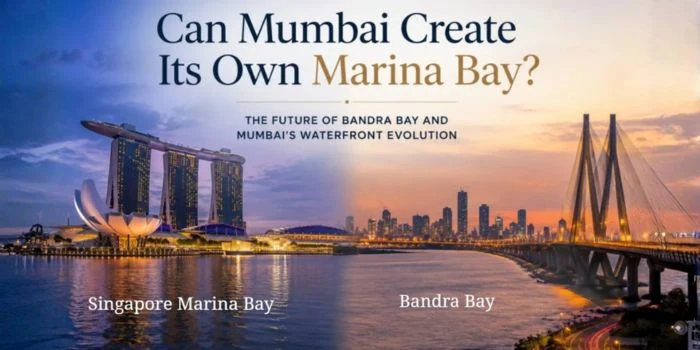
In Singapore, it’s Marina Bay. In London, it’s Canary Wharf and the Docklands. For Sydney, it’s the harbor. These waterfronts do more than line the city; they shape how people see and experience each place. They bring ambition, culture, tourism, and global attention. Mumbai has always had a special connection to the sea. Its coastline has shaped the city’s identity, economy, and history for generations. Yet much of Mumbai’s waterfront remains fragmented, underused, or poorly connected to the rest of the city.
Today, that may be changing.
Major infrastructure investments are reshaping mobility across the Mumbai Metropolitan Region (MMR). At the heart of this transformation lies Bandra Bay, one of Mumbai’s most strategically positioned waterfront districts. Bandra Bay is emerging as one of the city’s most strategically positioned waterfront districts. This marks a shift from potential to action. The opportunity before Mumbai is not simply to create another premium address; it is to develop a waterfront ecosystem that strengthens the city’s economy, enhances its global image, attracts tourism and investment, and contributes to its long-term competitiveness.
The real question isn’t whether Mumbai can copy Marina Bay, but whether it can create something unique that stands out on its own and strengthens the city’s waterfront advantage.
Waterfronts Are Economic Engines, Not Just Real Estate
Waterfronts were once hubs for trade, logistics, and commerce. Over time, forward-thinking cities saw a chance to turn these areas into drivers of economic growth. As cities changed, many waterfront districts moved beyond their old industrial roles.
Marina Bay has helped make Singapore a top destination for business and tourism worldwide.
Canary Wharf turned London’s old docklands into a major financial center. Sydney Harbour is now a symbol of Australia, known around the world. Dubai Marina has also changed the city’s image, making it more appealing for lifestyle and tourism.
Their impact goes well beyond real estate.
These places attract talent, investment, visitors, and global attention. More importantly, they become engines of economic activity, creating jobs, stimulating hospitality, retail, entertainment, financial services, and entrepreneurship. This creates a ripple effect that boosts the economy and raises the city’s profile worldwide. The waterfront may be the setting, but the real outcome
is economic value creation and city branding. This is the most important lesson for cities seeking long-term transformation.
Why Bandra Bay Matters Now
Urban districts thrive when good connectivity, strong infrastructure, active economic life, and a clear long-term vision come together at the right time.
Mumbai is now reaching this important stage.
Projects such as the Coastal Road, Bandra-Worli Sea Link, Metro expansion, Navi Mumbai International Airport, the Mumbai-Trans Harbor Link, and the Mumbai-Ahmedabad High-speed Rail Corridor are reshaping how people, businesses, and capital move across the region.
Together, they are expanding the city’s accessibility, reducing travel barriers, and creating new patterns. As the city changes, Bandra Bay stands out as a key location. It is where some of Mumbai’s most important residential, business, financial, and lifestyle areas meet the districts.
History shows that places with better connections often become centers of urban change. Examples like London’s Docklands, Singapore’s Marina Bay, and other waterfront districts around the world show how easier access can create new economic opportunities. As Mumbai’s network grows stronger, Bandra Bay is set to become even more important for the city’s future.
Bandra Bay now finds itself at a similar moment in Mumbai’s evolution.
The Difference Between An Address And A Destination
Many people think successful waterfront districts are mostly residential areas. In fact, they thrive because they become destinations.
People don’t go to Marina Bay just because they live there. They come for the experiences. It’s a place to work, eat, attend events, enjoy culture, spend time in public spaces, and take in the city. The same goes for Sydney Harbor, Barcelona’s waterfronts, and London’s South Bank.
These areas stay lively from morning to night because they give people reasons to gather and take part.
The distinction is critical.
Destinations create economic value that goes well beyond mere property ownership. They boost tourism, help local businesses, attract conferences and events, support new ideas, and strengthen a city’s brand. They become places that locals are proud of and that visitors remember.
The world’s most successful waterfront districts are remembered not for the homes they contain, but for the experiences they create.
For Bandra Bay to reach its full potential, it needs to become a destination that draws in residents, visitors, businesses, cultural groups, and global events.
Building An Ecosystem, Not A Skyline
The world’s most successful waterfront districts were never created through a single landmark or standalone development. They were built as ecosystems. No individual building defines Marina Bay. No single tower defines Canary Wharf. No one attraction defines Sydney Harbour. Their success comes from the interaction between public spaces, cultural venues, hospitality assets, offices, residences, retail experiences, recreation, events, and the waterfront itself.
Great waterfront districts are designed around people, not projects.
They prioritise walkability, accessibility, public engagement, cultural programming, open spaces, and year-round activity. They create environments where business, leisure, tourism, and community life coexist. When these elements come together, a waterfront ceases to be a location and becomes an ecosystem.
In this context, developments such as Hiranandani Bay Heights contribute to the broader evolution of Bandra Bay by bringing long-term investment, architectural character, and confidence to the district. However, the true success of Bandra Bay will ultimately be defined by the strength of the ecosystem that develops around it.
An ecosystem creates enduring value for cities.
The Importance Of Alignment
Transforming a waterfront district takes more than just building new infrastructure. It needs cooperation among many groups with different goals. Governments lay the groundwork with infrastructure, policies, planning, and public funding. The private sector brings in money, new ideas, development skills, and long-term trust. Urban designers, cultural groups, hospitality businesses, local companies, and community members all help shape the district’s future.
The best waterfronts around the world show that lasting value comes when infrastructure, investment, design, culture, tourism, and community efforts all work together toward a common goal.
As Bandra Bay grows and changes, its success will rely on everyone working together to build a lively, welcoming, and mixed-use waterfront that benefits the whole city. The focus should always stay on the district as a whole.
A Defining Opportunity For Mumbai
Looking at places like Marina Bay, Canary Wharf, or Sydney Harbor helps show what cities can achieve when they move past single projects and focus on long-term change.
However, Mumbai does not need to copy any other city. The most successful urban districts in the world succeed because they show the unique character of their own cities.
Mumbai’s entrepreneurial spirit, financial strength, cultural diversity, creative industries, and resilience give it a distinct advantage.
The opportunity before Mumbai is not to build another Marina Bay. It is to create a globally benchmarked waterfront district that is unmistakably Mumbai.
If connectivity, public spaces, culture, hospitality, planning, and private investment continue to converge, Bandra Bay can become far more than a premium waterfront location.
It can emerge as a powerful symbol of Mumbai’s next chapter, one that strengthens the city’s economy, elevates its global stature, and reinforces its position as India’s most dynamic urban centre.
They do more than transform the shoreline.
They become catalysts for economic growth, urban transformation, and city identity. And in doing so, they help shape the future of an entire city.
Follow Us On Social Media:
Discover more from Niranjan Hiranandani
Subscribe to get the latest posts sent to your email.