

 By
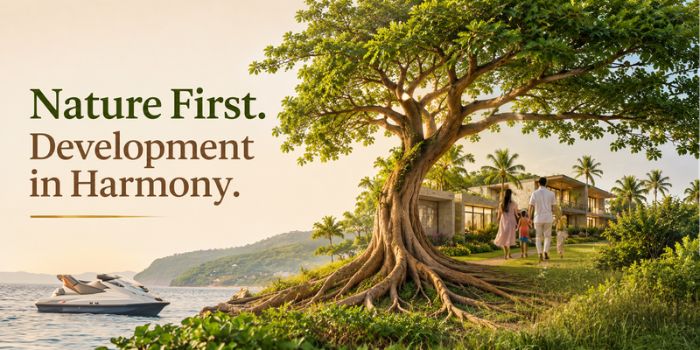
The future of coastal development lies in creating contemporary residential opportunities while respecting the natural environment, local communities and cultural character that make destinations like Alibaug special.
Alibaug’s greatest asset isn’t what you can build on its land, but what the land already offers. Its coconut groves, expansive coastline, village neighbourhoods, open landscapes and unhurried rhythm of life have shaped an identity that architecture or infrastructure alone cannot replicate.
As Alibaug evolves as a residential and second-home destination, the conversation must extend beyond its development potential. It must consider how new development can contribute to its future while respecting the natural and cultural character that makes it desirable.
For me, the principle is straightforward: Nature is not an amenity; it is the foundation.
Development’s responsibility is not to redefine Alibaug but to create contemporary residential opportunities while respecting everything that makes the destination distinctive. This calls for a more considered approach to coastal development, one that balances modern infrastructure and residential aspirations with environmental sensitivity and community participation.
Responsible Coastal Development Begins Before Construction
Every landscape has its own character, and responsible planning must begin by understanding it. In coastal destinations such as Alibaug, natural vegetation, terrain, drainage patterns, wetlands and existing settlements should inform decisions about the built environment.
Responsible coastal development requires a fundamental shift in approach. Instead of treating natural features as additions to a master plan, the landscape itself must influence how that plan evolves. Understanding the land, its ecological sensitivities and its natural systems is an essential starting point for nature-integrated development.
Afforestation, forest cultivation, ecological zones and the preservation of environmentally sensitive areas should form part of a long-term environmental strategy. Equally important is what happens after implementation. Trees require nurturing, water resources need responsible management, and ecological systems demand consistent monitoring and upkeep.
Development should not seek to manufacture nature through landscaping. It must recognise and protect the natural advantages that already exist. The objective should be to work with the landscape rather than impose an entirely new character upon it.
Hiranandani Sands Alibaug: An Approach to Nature-Integrated Development
At Hiranandani Sands, Alibaug, the opportunity is to demonstrate how contemporary residential planning can respond sensitively to a naturally endowed coastal destination.
The development approach treats landscape integration, forest cultivation, afforestation, ecological zones, and sensitivity to adjoining wetlands as interconnected aspects of responsible planning. These considerations reflect the importance of understanding the natural setting while creating residential environments that can coexist with their surroundings.
The objective is not simply to introduce green spaces within a residential development but to recognise the larger ecological context in which it is situated. This distinction is important. Nature-integrated coastal living must go beyond landscaping to consider the relationship between the built environment and the surrounding natural systems.
Modern comforts and environmental responsibility should reinforce one another, not compete for space.
Sustainable Township Planning Is a Long-Term Responsibility
A thoughtfully planned residential community requires more than attractive architecture and green surroundings. Reliable water supply, power infrastructure, internal roads, drainage, wastewater treatment, waste management and maintenance systems determine how responsibly a development functions over time.
For sustainable township development, these are not secondary considerations. They are essential planning responsibilities. Coastal environments add another dimension because seasonal conditions, water systems, and ecological sensitivities shape long-term infrastructure needs.
A development’s environmental responsibility also shows in how it meets its residents’ everyday needs. Water availability, resource efficiency, drainage and waste management have implications beyond the immediate residential boundary. Infrastructure must therefore be planned not only for current needs but also for long-term environmental impacts.
Sustainability, however, cannot rest solely on the developer. Developers must establish responsible infrastructure and management systems, while residents, facility management teams and service providers must contribute through responsible consumption, waste segregation, water conservation and environmental upkeep.
The real measure of sustainable development is not the number of green initiatives announced, but the consistency with which they are maintained.
Creating Economic Opportunities While Respecting Local Identity
The future of coastal development in Alibaug must also recognise the people whose livelihoods, businesses and traditions have shaped the destination. Alibaug already has an established local economy, cultural practices and a longstanding relationship between its communities and the surrounding natural environment.
New residential development should recognise these existing strengths while creating opportunities for broader economic participation: construction and allied employment, local vendors, suppliers and retail establishments.
FAQs
1. What is Hiranandani Sands Alibaug’s approach to responsible coastal development?
Hiranandani Sands, Alibaug follows a nature-integrated approach to township planning, incorporating landscape integration, afforestation, forest cultivation, ecological zones and sensitivity to adjoining wetlands. The objective is to create contemporary residential opportunities while respecting Alibaug’s natural environment and cultural identity.
2. How is Hiranandani Sands Alibaug different from conventional second-home developments?
Spread across approximately 225 acres, Hiranandani Sands, Alibaug is envisioned as an integrated coastal township offering premium villa plots, planned infrastructure, natural surroundings and community-centric living. Its master-planned approach caters to evolving residential aspirations beyond conventional weekend retreats.
3. How does Hiranandani Sands Alibaug approach sustainable township development?
The development philosophy recognises the importance of responsible water management, drainage, wastewater treatment, waste management and long-term infrastructure maintenance. These considerations are integral to creating a residential ecosystem that responds to the environmental sensitivities of a coastal destination.
4. How can Hiranandani Sands Alibaug contribute to local communities?
Hiranandani Sands, Alibaug aims to encourage economic participation through opportunities for local employment, vendors, suppliers, service providers and businesses. The broader approach is to support regional economic growth while respecting Alibaug’s existing livelihoods, traditions and cultural character.
5. How does Hiranandani Sands Alibaug carry forward the Hiranandani legacy?
Drawing on decades of experience in integrated township development, Hiranandani Sands Alibaug extends the brand’s philosophy of thoughtful master planning, engineering excellence, environmental responsibility and community-centric living to a coastal setting. Its vision is to create enduring residential value while respecting the natural identity of Alibaug.
Follow Us On Social Media:
Suggested Reads
Discover more from Niranjan Hiranandani
Subscribe to get the latest posts sent to your email.