

 By
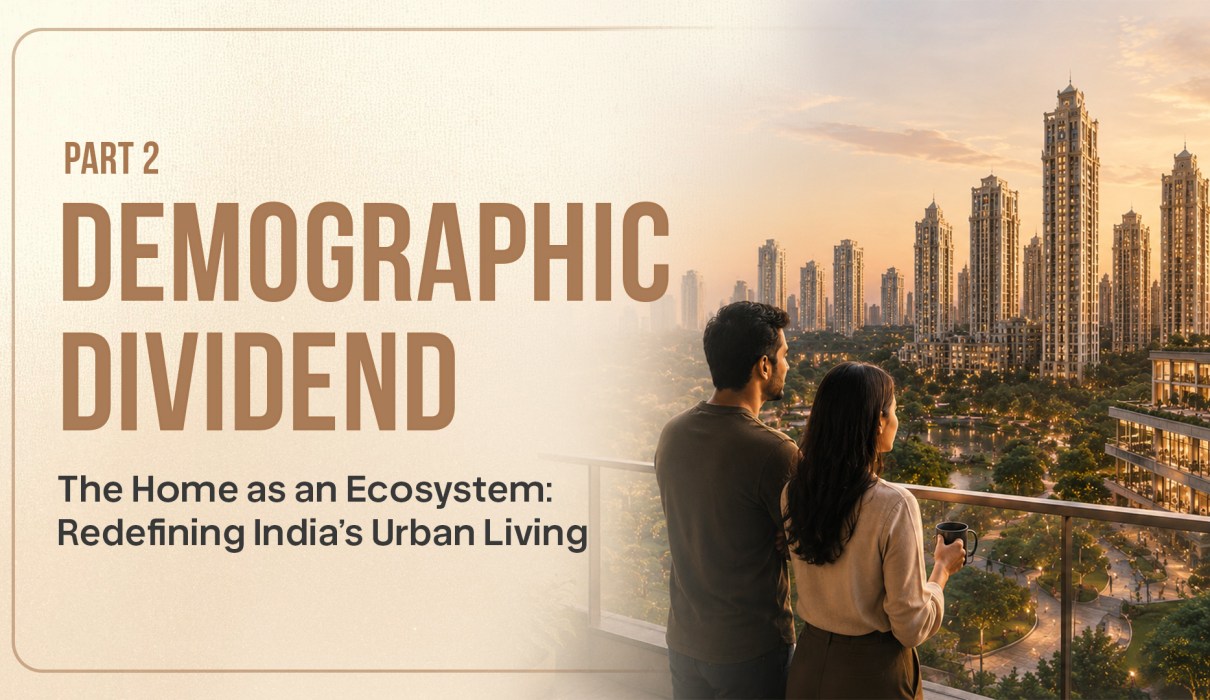
By India’s demographic transformation is no longer influencing only consumption patterns; it is fundamentally reshaping the real estate sector. Over the years, I have observed a significant shift in the mindset of Indian homebuyers. Earlier, the primary considerations revolved around location, connectivity, and affordability. While these factors remain important, the decision-making framework has evolved considerably.
Today, the question is no longer simply: “Where is the home located?”
Increasingly, the question has become:
“How Will My Lifestyle Be Here?
This transition reflects a deeper structural change driven by evolving demographics, rising aspirations, changing lifestyles, and a more experience-oriented consumer mindset.
The Rise of the Experience-Driven Homebuyer
One of the most defining trends in Indian real estate today is the emergence of the upgrade buyer. Typically, in the 30-45 age bracket, this segment is financially more confident, globally exposed, and far more discerning in its expectations. Unlike first-time buyers who often prioritise ownership itself, upgrade buyers focus on quality of living, long-term utility, and lifestyle enhancement.
This shift is visible across major urban markets, where premium housing demand has seen substantial growth in recent years. In several leading Indian cities, premium housing demand has accelerated sharply, reflecting the growing willingness of buyers to invest in lifestyle-led living environments rather than purely functional housing.
Importantly, these buyers are willing to pay not merely for larger spaces, but for what I would call “experiential economy ”, the ability of a development to enhance everyday living through thoughtful infrastructure, amenities, and community ecosystems.
Homes Are Becoming Multi-Functional Ecosystems
The pandemic accelerated an already emerging trend: the transformation of homes into multi-functional environments.
A home today is expected to accommodate:
- Work
- Wellness
- Recreation
- Social interaction
- Personal time
This has significantly altered buyer expectations.
The increase in residential ticket sizes across major cities is not only linked to pricing trends but also to the expanded utility value of homes. Buyers are investing more because the home has evolved from a purely residential space into a multi-dimensional living environment.
As hybrid work models continue to shape urban lifestyles, homes designed for flexibility are becoming increasingly important. Dedicated work corners, adaptable layouts, and integrated hybrid spaces are no longer niche requirements; they are becoming mainstream expectations.
In many ways, the home has evolved from being a place people return to, into a space where multiple dimensions of life now coexist simultaneously.
Amenities Have Moved from Add-Ons to Core Demand Drivers
Another major shift I see in Indian real estate is the changing role of amenities. A decade ago, amenities were often viewed as supplementary offerings. Today, they play a central role in influencing buying decisions. However, the conversation is no longer about the number of amenities being offered. It is about relevance and integration.
Modern homebuyers increasingly seek developments that incorporate:
- Wellness infrastructure
- Green and open spaces
- Community and social zones
- Hybrid working spaces
- Entertainment and recreational ecosystems
In many ways, amenities have evolved into lifestyle infrastructure. This is particularly important in dense urban environments where access to quality shared spaces significantly improves everyday living experiences.
Time Has Become a Luxury
One of the most underestimated shifts in urban India is the changing value of time. Long commutes, fragmented lifestyles, and increasing professional demands have created a growing preference for integrated living environments.
Today’s homebuyer increasingly values developments that reduce travel time and create greater convenience through integrated ecosystems that combine residential, social, recreational, and lifestyle infrastructure. In this context, integrated developments are no longer viewed only as
premium offerings; they are increasingly becoming practical urban solutions. The aspiration today is not only to own a better home, but to experience a better quality of everyday life.
Community as a New Urban Currency
Post-pandemic, another important shift has emerged: the renewed importance of community. People are seeking environments that enable interaction, engagement, and a sense of belonging. Clubhouses, social zones, shared wellness spaces, and community-focused infrastructure are now central to residential planning because they address a growing emotional and social need within urban living. Real estate today is not only shaping physical spaces it is shaping social experiences. In increasingly dense and digitally connected cities, meaningful human interaction itself has become a premium urban need.
How New Demographics Are Influencing Housing Demand?
The evolving demographic profile of India is also creating more segmented and specialised demand patterns.
Women homebuyers, for instance, are increasingly influencing purchasing decisions with a stronger emphasis on:
- Safety
- Accessibility
- Long-term asset quality
Similarly, DINK (Double Income, No Kids) households are driving demand for flexibility-oriented, lifestyle-focused living environments that prioritise experience over conventional family formats.
Interestingly, while aspirations remain similar across Tier 1 and Tier 2 cities, the execution formats differ. Metro cities may emphasise vertical integrated living, while emerging cities often offer larger-format community developments with greater spatial flexibility. What is changing is not just housing demand, but the very definition of value across demographic segments.
Real Estate as a Strategic Asset Class
Another structural shift worth noting is the growing financialisation of real estate.
For many buyers today, property is no longer viewed solely as a consumption purchase. It is increasingly becoming part of a diversified investment portfolio alongside equities, mutual funds, and other financial assets.
This has led to greater emphasis on:
- Brand credibility
- Asset quality
- Long-term value creation
- Future livability
The modern buyer is evaluating real estate not only emotionally, but strategically.
Looking Ahead
What we are witnessing today is not a temporary shift in preference; it is a long-term transformation in how housing demand is being defined. As demographics continue to evolve, the expectations from residential developments will become even more nuanced, experience-led, and lifestyle-oriented. If real estate is already evolving this rapidly, the next decade will not be incremental; it will be transformative.
The next question, therefore, becomes critical:
What will the future of Indian housing look like in a country shaped by demographics, experience-driven living, and changing urban aspirations?
That is the direction we will explore in the final part of this series.
Closing Thought
The future of real estate will not be defined only by location or scale.
It will be defined by how deeply developments understand the evolving aspirations of India’s new consumer.
Follow Us On Social Media:
Discover more from Niranjan Hiranandani
Subscribe to get the latest posts sent to your email.